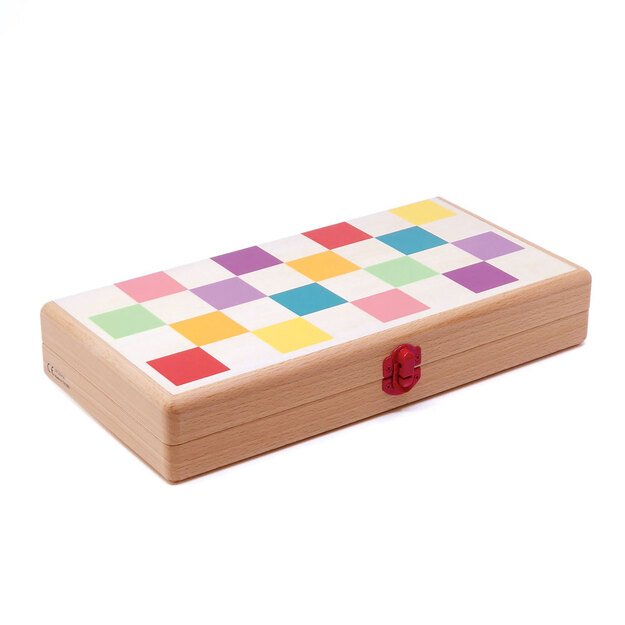
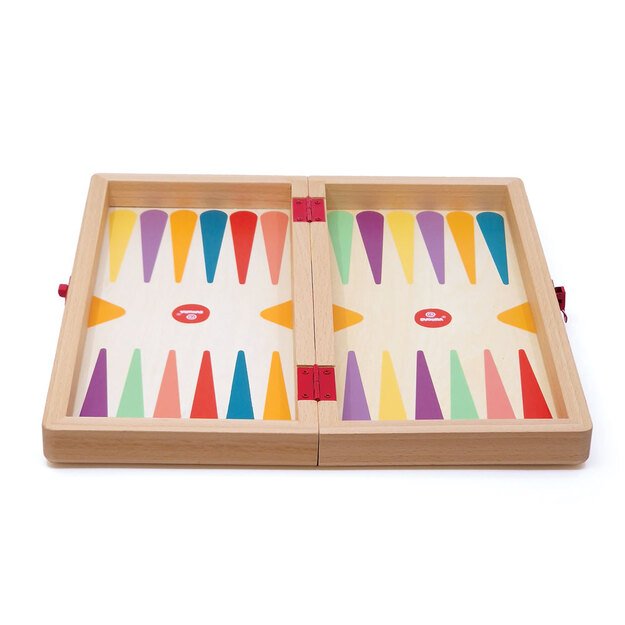
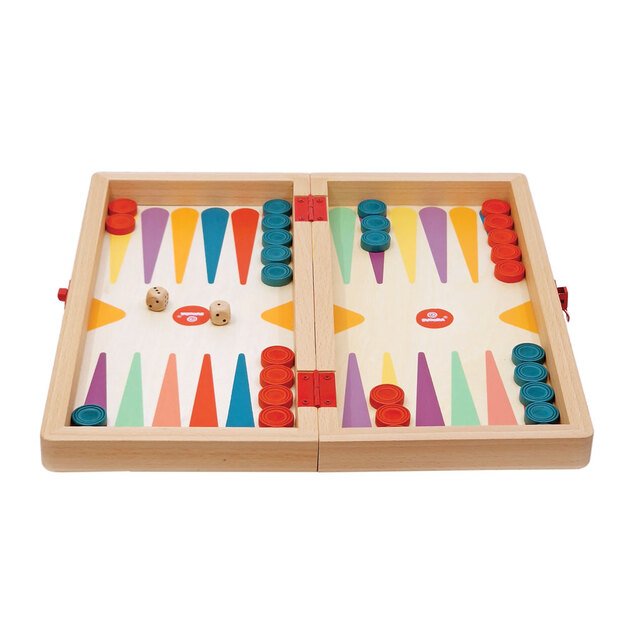
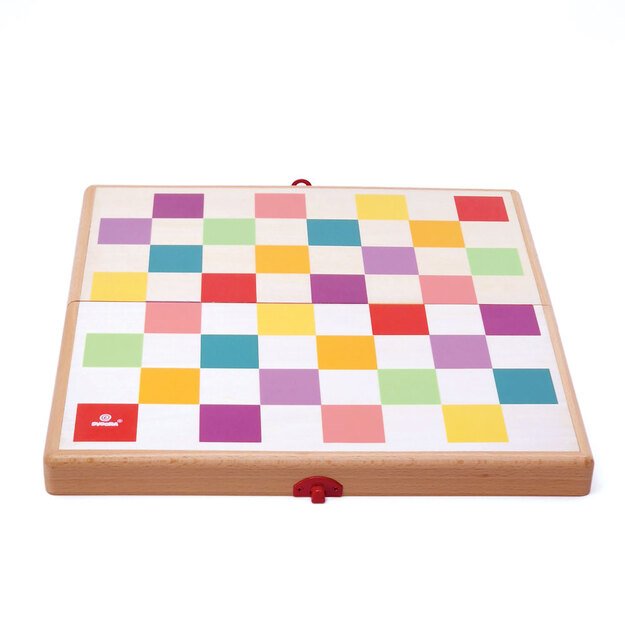
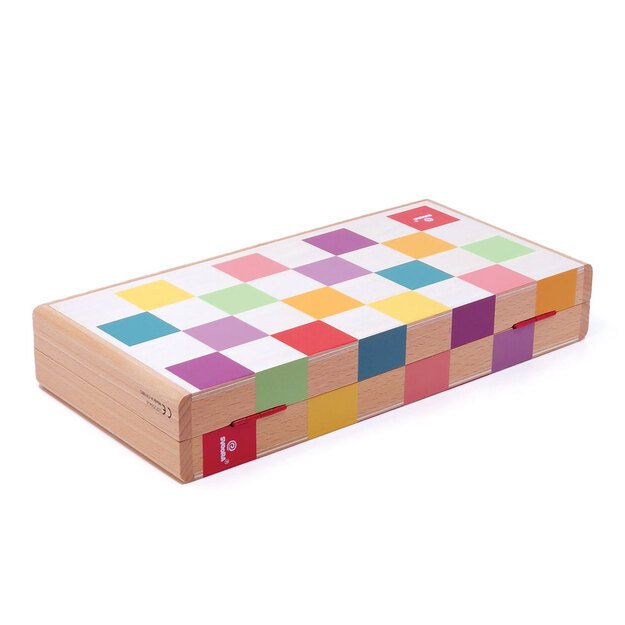
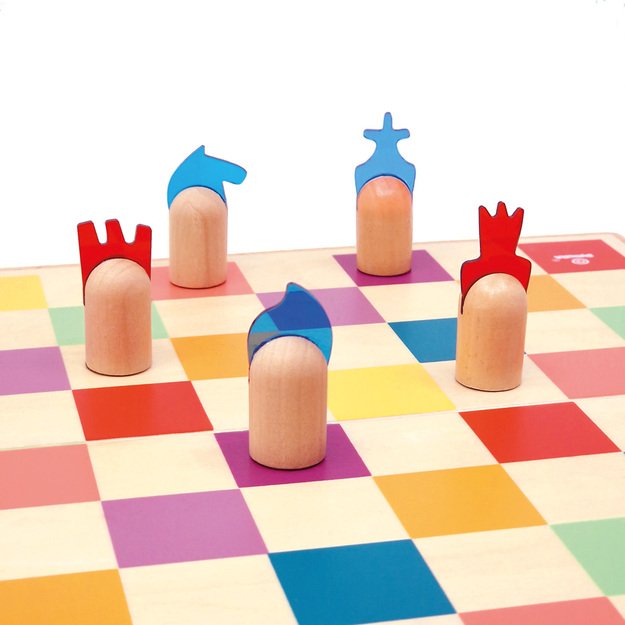
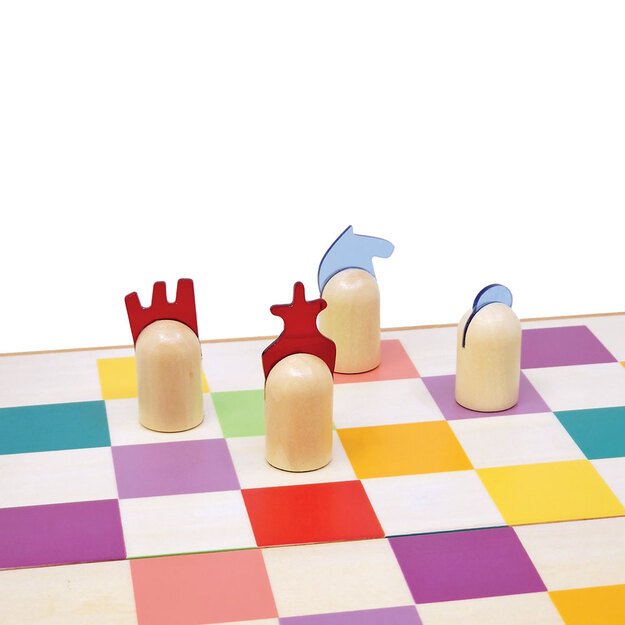
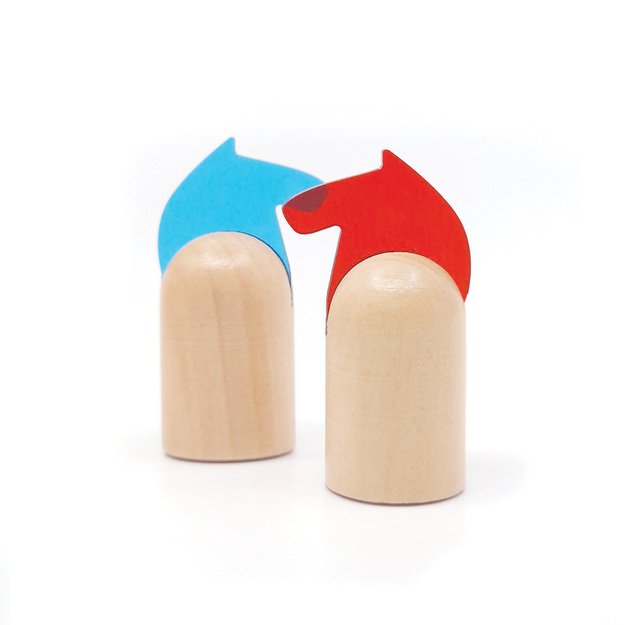
Svoora chess, checkers and backgammon set

Product code: SV23148

Available quantity 13

3199 inc VAT
Have any questions about this item? Ask
Manufacturer: SVOORA

Experience timeless fun with the Chess, Checkers & Backgammon Game - a stylish, all-in-one set that combines strategy, design, and endless entertainment.

CONTENTS  

  • 1 chess board 
  • 32 chess pieces 
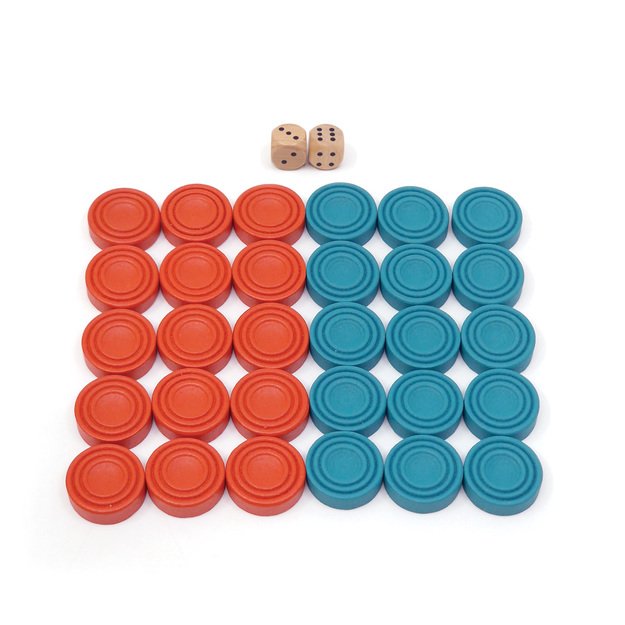
  • 30 checkers/backgammon pawns 
  • 2 dice 
  • Instructions manual 

HOW TO PLAY 

1. CHESS 

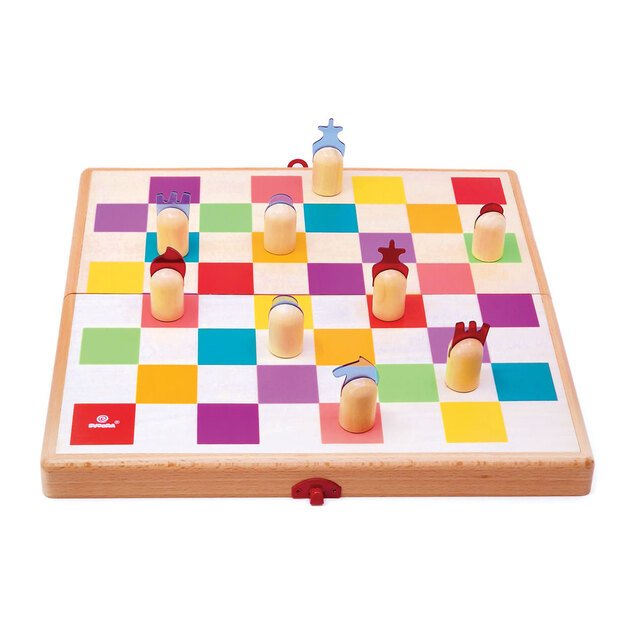
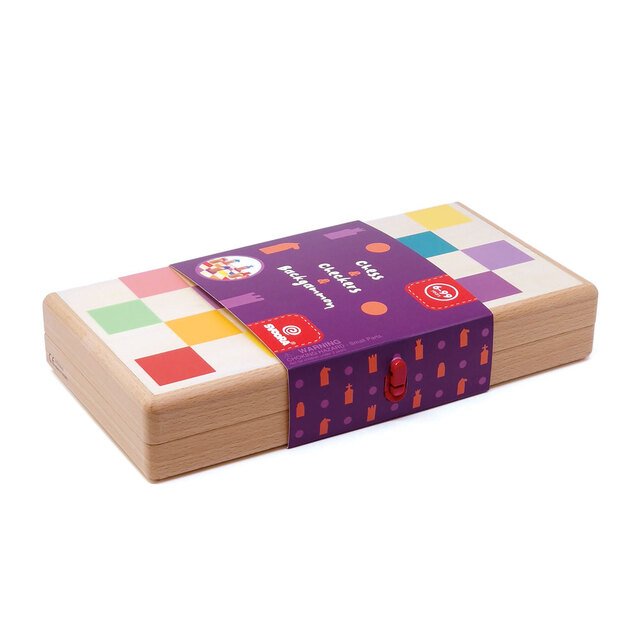
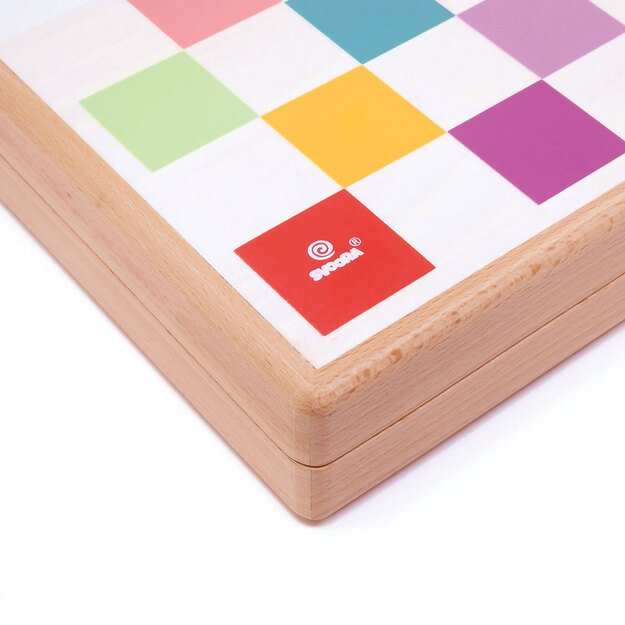
Chess is played on the outer side of the wooden box, which is a chessboard with 64 squares. To set up the game, place the chessboard so that the bottom-right square in front of each player is white (unprinted) and place your pieces in the following way: 

  • In the first row, from left to right, place the following pieces: Rook, Knight, Bishop, Queen / King, Bishop, Knight, Rook. 
  • In the second row, place all the Pawns. 
  • Important: In traditional chess, the Queen is placed on the square of the same color (white Queen on a white square, black Queen on a black square). In this colorful version, place the blue Queen on the white (unprinted) square and the red Queen on the pink (printed) square. 

The goal of the game is to put the opponent’s King in "checkmate" (meaning the King cannot move to any square that is not threatened by one of your pieces). The player that has the red pawns or the one that won the last game, plays first. In your turn, move one of your pieces according to the following instructions: 

  1. King: Moves 1 square in any direction: diagonally, horizontally, or vertically. It is the most important piece because if it is captured (checkmate), the game ends. 
  2. Queen: Moves any number of squares horizontally, vertically, or diagonally and is considered the most powerful piece. 
  3. Knight (Horse): Moves in an "L" shape, i.e., 2 squares in one direction and 1 square in a perpendicular direction, or 1 square in one direction and 2 in a perpendicular direction. It is the only piece that can jump over other pieces! 
  4. Bishop: Moves any number of squares diagonally. 
  5. Rook: Moves any number of squares horizontally or vertically. 
  6. Pawn: Moves 1 square forward. The exception is the first move of each Pawn, which can move up to 2 squares forward. To capture an opponent's piece using a Pawn of yours, you can only do it by moving diagonally (X mark on the image). If a Pawn reaches the opponent's last row, it can be promoted to Queen, Rook, Bishop, or Knight (your choice). 

When you move one of your pieces onto a square occupied by an opponent's piece, you "capture" that piece and remove it from the board. 

The above instructions are meant to help you get a first contact with chess and understand the basic playing rules. You will learn how to place the pieces, how they move, and how you can win the game. If you like chess and want to learn more, there are many other tactics and strategies you can explore. You can find books, websites, or even apps that will help you learn more and become a true chess expert! 

2. CHECKERS 

Checkers is played on the outer side of the wooden box, which is a chessboard with 64 squares. To set up the game, place the chessboard so that the bottom-right square in front of each player is white, and the players place their 12 pieces on the colored squares of the chessboard in the first three rows in front of each one of them. 

The goal of the game is to "capture" all of your opponent's pieces or block them in such a way that they can no longer make any moves. The player that has the red pieces or the one that won the last game plays first. 

On your turn, move one piece 1 square diagonally, only forward. If an opponent’s piece is diagonally from yours and the next diagonal square is empty, you must jump over the opponent's piece and "capture" it. The captured piece is removed from the board. If you can capture more than 1 piece in consecutive moves, you must do so in one turn. Every time you jump over an opponent’s piece, you capture it and remove it from the board. 

When a piece reaches the last row of the opponent, it becomes a "King" and can move any number of squares, diagonally, both forward and backward. 

3. BACKGAMMON (DOORS) 

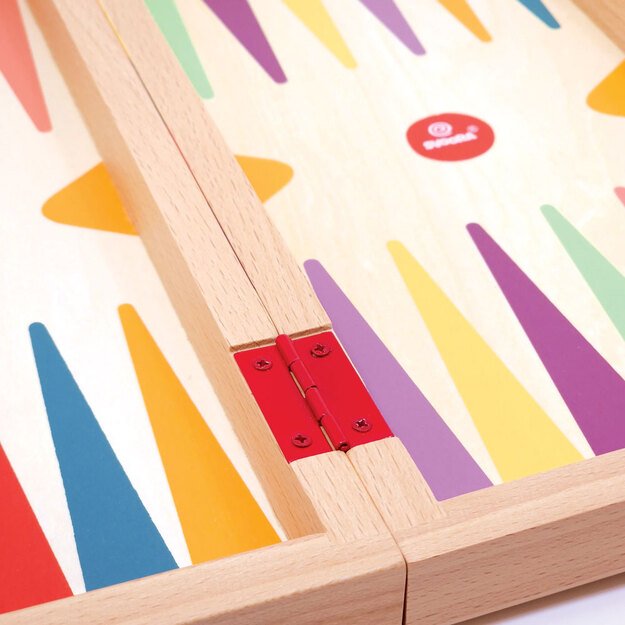
Backgammon is played on the inner side of the wooden box, which consists of 4 sections, each with 6 spaces, so in total 24 spaces. To set up the game, the players place their pawns as shown in the instructions. The goal is to bring your pawns to the opponent's side (your home) and then be the first to "remove" them from the board. 

For the first round, you both roll one dice and whoever has the bigger roll plays first. For the next rounds, the winner of the previous round plays first. On your turn, roll the two dice and move your pawns accordingly, always heading from your starting point to your opponent's side (your home), passing through all 4 sections. 

  • The numbers shown on the dice determine how many spaces a pawn can move. For example, if you roll 4 and 3, you can move 1 pawn 4 spaces and another 3 spaces or move the same pawn 4+3 spaces. 
  • If you roll doubles (two of the same number), you play that number 4 times instead of 2. 
  • You must play your roll if possible. 
  • Be careful! You cannot move your pawn to a space occupied by two or more of the opponent’s pawns, as this is a "door" (block). However, if there is only one opponent’s pawn, you "capture" it and remove it from the board, occupying that space. 
  • When one of your pawns is "captured," on your next turn, you roll the dice to re-enter it into your starting section on the corresponding space, based on the number you roll. If the space you need to enter is occupied by the opponent’s pawns, you cannot enter and must wait until your next turn to try again. When a pawn is captured and cannot re-enter, you lose your turn, as you cannot play the roll with another pawn already on the board. 

When all your pawns are in your home (opponent’s starting section), you can begin removing them from the board. 

  • Roll the dice and remove one pawn for each number you roll from the corresponding position. 
  • You can still move the pawns within your home. For example, if you roll 2 and 3, and you have a pawn on space 5 but no pawns on spaces 2 or 3, you can play the roll “2” by moving the pawn 2 spaces (from 5 to 3) and then play the roll “3” by removing that pawn from the board. 
  • If you roll doubles, you can remove 4 pawns from the corresponding positions. 
  • If you roll a big number, but you only have pawns in the smaller positions, then you can remove pawns from the smaller positions starting from the one closer to your roll. For example, if you roll double 6, but you only have pawns in the positions 5, 3 and 2, then you take from the position 5, when these are over, you take from position 3 and so on. 
  • If, while starting to remove your pawns, one of them gets captured, you must place it back in your starting position (following the above instructions), move it back into your home, and then continue removing pawns. 

"Doors" is just one of the many games you can play. If you enjoy Backgammon, there are other variations of the game and many other interesting games you can discover! 

Toy dimensions 30x15x5 cm.

Recommended for ages 6+.

Product bears the CE marking.

Warning! Not suitable for children under 3 years. Small parts. Choking hazard.

Made in China, Created by Designed by Svoora, TSIRONIS S.A., Greece.

Chess & Checkers & Backgammon
Chess & Checkers & Backgammon. 1 chess board, 32 chess pieces, 15 checkers/backgammon pawns, 2 dice. Instructions included. 

CONTENTS

  • 1 chess board 
  • 32 chess pieces 
  • 30 checkers/backgammon pawns 
  • 2 dice 
  • Instructions manual 

HOW TO PLAY 

1. CHESS 

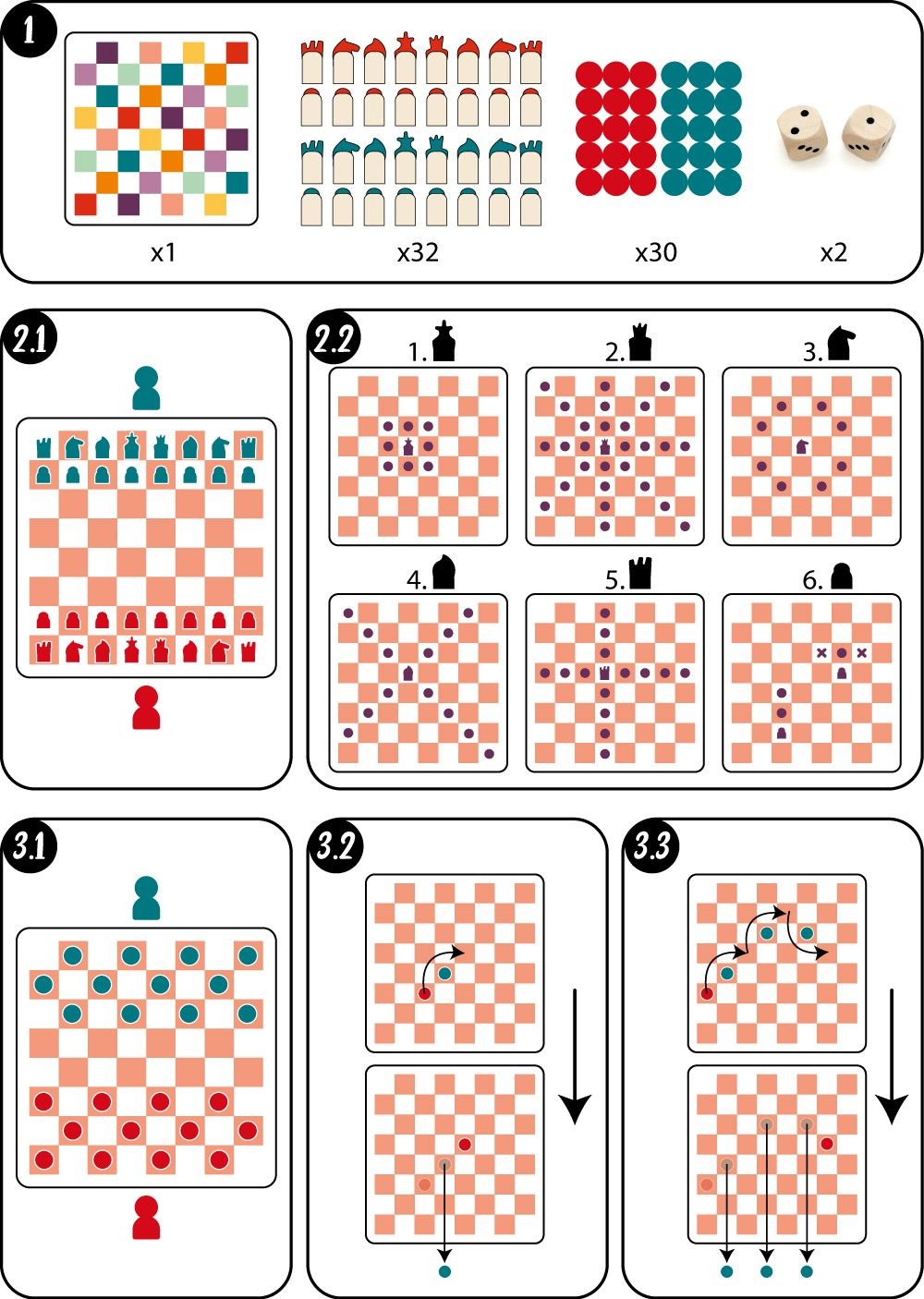
Chess is played on the outer side of the wooden box, which is a chessboard with 64 squares. To set up the game, place the chessboard so that the bottom-right square in front of each player is white (unprinted) and place your pieces in the following way (2.1): 

  • In the first row, from left to right, place the following pieces: Rook, Knight, Bishop, Queen / King, Bishop, Knight, Rook. 
  • In the second row, place all the Pawns. 
  • Important: In traditional chess, the Queen is placed on the square of the same color (white Queen on a white square, black Queen on a black square). In this colorful version, place the blue Queen on the white (unprinted) square and the red Queen on the pink (printed) square. 

The goal of the game is to put the opponent’s King in "checkmate" (meaning the King cannot move to any square that is not threatened by one of your pieces). The player that has the red pawns or the one that won the last game, plays first. In your turn, move one of your pieces according to the following instructions (2.2): 

  1. King: Moves 1 square in any direction: diagonally, horizontally, or vertically. It is the most important piece because if it is captured (checkmate), the game ends. 
  2. Queen: Moves any number of squares horizontally, vertically, or diagonally and is considered the most powerful piece. 
  3. Knight (Horse): Moves in an "L" shape, i.e., 2 squares in one direction and 1 square in a perpendicular direction, or 1 square in one direction and 2 in a perpendicular direction. It is the only piece that can jump over other pieces! 
  4. Bishop: Moves any number of squares diagonally. 
  5. Rook: Moves any number of squares horizontally or vertically. 
  6. Pawn: Moves 1 square forward. The exception is the first move of each Pawn, which can move up to 2 squares forward. To capture an opponent's piece using a Pawn of yours, you can only do it by moving diagonally (X mark on the image). If a Pawn reaches the opponent's last row, it can be promoted to Queen, Rook, Bishop, or Knight (your choice). 

When you move one of your pieces onto a square occupied by an opponent's piece, you "capture" that piece and remove it from the board. 

The above instructions are meant to help you get a first contact with chess and understand the basic playing rules. You will learn how to place the pieces, how they move, and how you can win the game. If you like chess and want to learn more, there are many other tactics and strategies you can explore. You can find books, websites, or even apps that will help you learn more and become a true chess expert! 

2. CHECKERS 

Checkers is played on the outer side of the wooden box, which is a chessboard with 64 squares. To set up the game, place the chessboard so that the bottom-right square in front of each player is white, and the players place their 12 pieces on the colored squares of the chessboard in the first three rows in front of each one of them (3.1). 

The goal of the game is to "capture" all of your opponent's pieces or block them in such a way that they can no longer make any moves. The player that has the red pieces or the one that won the last game plays first. 

On your turn, move one piece 1 square diagonally, only forward. If an opponent’s piece is diagonally from yours and the next diagonal square is empty, you must jump over the opponent's piece and "capture" it (3.2). The captured piece is removed from the board. If you can capture more than 1 piece in consecutive moves, you must do so in one turn (3.3). Every time you jump over an opponent’s piece, you capture it and remove it from the board. 

When a piece reaches the last row of the opponent, it becomes a "King" and can move any number of squares, diagonally, both forward and backward. 

3. BACKGAMMON (DOORS) 

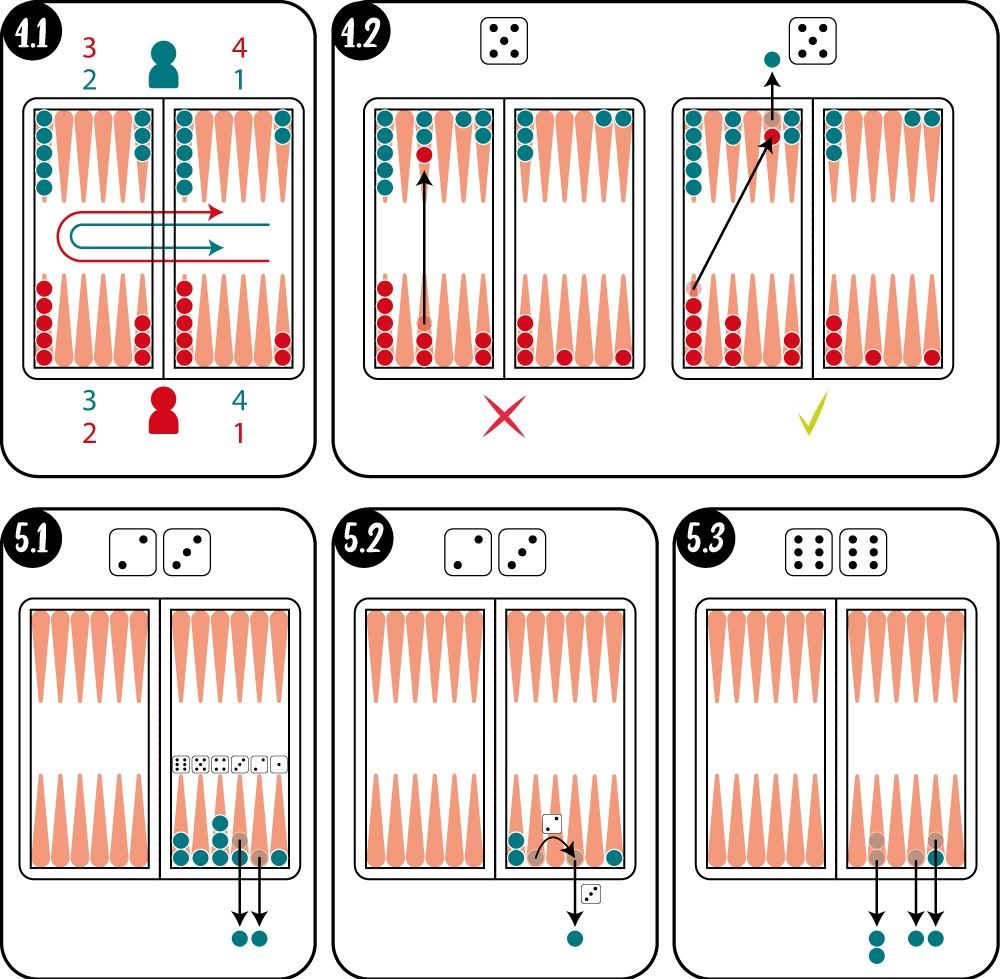
Backgammon is played on the inner side of the wooden box, which consists of 4 sections, each with 6 spaces, so in total 24 spaces. To set up the game, the players place their pawns as shown in the image 4.1. The goal is to bring your pawns to the opponent's side (your home) and then be the first to "remove" them from the board. 

For the first round, you both roll one dice and whoever has the bigger roll plays first. For the next rounds, the winner of the previous round plays first. On your turn, roll the two dice and move your pawns accordingly, always heading from your starting point to your opponent's side (your home), passing through all 4 sections (4.1). 

  • The numbers shown on the dice determine how many spaces a pawn can move. For example, if you roll 4 and 3, you can move 1 pawn 4 spaces and another 3 spaces or move the same pawn 4+3 spaces. 
  • If you roll doubles (two of the same number), you play that number 4 times instead of 2. 
  • You must play your roll if possible. 
  • Be careful! You cannot move your pawn to a space occupied by two or more of the opponent’s pawns, as this is a "door" (block). However, if there is only one opponent’s pawn, you "capture" it and remove it from the board, occupying that space (4.2). 
  • When one of your pawns is "captured," on your next turn, you roll the dice to re-enter it into your starting section on the corresponding space, based on the number you roll. If the space you need to enter is occupied by the opponent’s pawns, you cannot enter and must wait until your next turn to try again. When a pawn is captured and cannot re-enter, you lose your turn, as you cannot play the roll with another pawn already on the board. 

When all your pawns are in your home (opponent’s starting section), you can begin removing them from the board. 

  • Roll the dice and remove one pawn for each number you roll from the corresponding position (5.1). 
  • You can still move the pawns within your home. For example, if you roll 2 and 3, and you have a pawn on space 5 but no pawns on spaces 2 or 3, you can play the roll “2” by moving the pawn 2 spaces (from 5 to 3) and then play the roll “3” by removing that pawn from the board (5.2). 
  • If you roll doubles, you can remove 4 pawns from the corresponding positions. 
  • If you roll a big number, but you only have pawns in the smaller positions, then you can remove pawns from the smaller positions starting from the one closer to your roll. For example, if you roll double 6, but you only have pawns in the positions 5, 3 and 2, then you take from the position 5, when these are over, you take from position 3 and so on. (5.3). 
  • If, while starting to remove your pawns, one of them gets captured, you must place it back in your starting position (following the above instructions), move it back into your home, and then continue removing pawns. 

"Doors" is just one of the many games you can play. If you enjoy Backgammon, there are other variations of the game and many other interesting games you can discover! 

Write a review
Recently viewed View all items
Product code: SV23043
..
599
Product code: SV23131
..
999
Product code: SV23136
..
1099
Product code: SV23148
..
3199
Write
Call us